

The Great Uncoupling
Why cities like Tulsa are rewriting the rules of where—and how—we work.

Short version: the “we’ll pay you to move here” pitch is no longer a gimmick. It’s becoming a mainstream economic development strategy—especially in places that don’t have the leverage (or the appetite) to shower corporations with subsidies. And yes, the math can work. In Tulsa, every public dollar spent on its remote-worker program is generating $4.31 in economic benefits for residents.
The remote reality check
Before we get to the cities, a quick dose of context. Despite RTO mandates in some industries, fully remote work has settled into a durable minority. By 2025, about 13% of full-time U.S. employees were fully remote, with another 27% hybrid—numbers that have bounced around but keep landing in the same neighborhood. If you want a round number to hold in your head, call it roughly one in ten workers fully remote. That’s enough talent to matter—and to move.
This is the backdrop for the boom in relocation incentives: a national talent market where location is negotiable, wages are portable, and lifestyle wins deals. Instead of bribing companies, communities are recruiting people.
Tulsa wrote the modern playbook
Tulsa Remote, launched in 2018, is the most studied program in America—and for good reason. It offers selected remote workers $10,000, plus a soft-landing bundle (coworking, community, concierge-style onboarding). Evaluators found three big things:
It changes behavior. Between 58–70% of participants would not have moved to Tulsa absent the program. That’s the holy grail of incentives—actual inducement rather than paying for what would’ve happened anyway.
It’s efficient at job creation. Tulsa Remote is roughly six times more efficient per job created than typical business incentives. People are more mobile than plants, and human capital spills over.
It pays off. The headline ROI: $4.31 in local economic benefits per $1 spent. That shows up as higher local spending, a larger tax base, and new firms founded by transplants—benefits that accrue to existing residents, not just the newcomers.
If you’re a mayor or chamber exec, that’s an eye-opener. Traditional incentive playbooks chase employers, lock up capital, and often yield tepid spillovers. Tulsa’s bet is cheaper, faster, and—crucially—stackable with other strategies (downtown revitalization, tech recruitment, housing infill).
West Virginia proves retention is strategy, not luck
Ascend West Virginia took the same core idea—cash plus community—and tuned it to the state’s outdoors brand. The early numbers: nearly 1,000 new residents, 96% retention, and a reported $500 million economic impact tied to program expansion and tourism gains. You can quibble with attribution (and you should), but as a signal it’s clear: when you build belonging into the model, people stay.
The bigger lesson: incentives are table stakes; integration is the win. If you bring people but don’t help them land—finding schools, volunteering, hiking clubs, startup circles—you’re just lighting money on fire.
Vermont: small dollars, surprisingly big returns
Vermont was an early mover and, to its credit, measured results. The state’s Department of Financial Regulation found that:
2018 program (140 participants): around $7.6 million in annual economic impact, paying for itself in roughly two years.
2019 program (167 participants): roughly $9.5 million in annual impact, also recouping costs within two years.
On a crude ratio basis, the analysis estimated $66–$93 in economic activity per tax dollar, depending on the year.
Vermont later sunset the original program and retooled, but the signal is the same: targeted people-attraction can work—especially where demography (aging, out-migration) is the challenge.
Topeka and the mid-market push
Topeka’s Choose Topeka offers up to $15,000 when employers co-invest, and a tailored track for fully remote workers—$10,000 for buyers, $5,000 for renters. It’s a classic “nudge the decision” package that complements a relatively affordable housing market—exactly the combo mid-market cities should be leaning into.
We don’t yet have Tulsa-level ROI modeling for Topeka, but early housing and sales indicators suggest strong demand that programs like Choose Topeka likely amplify. When you import income, you boost transactions across housing, retail, and services. That’s the logic driving this new wave of people-first incentives.
The national aggregator view
Platforms like MakeMyMove now function as deal flow for cities—screening applicants, matching lifestyle fit, and tracking impact. Their 2024 tally: about 5,000 households relocated via incentives; $500 million in annual household income moved; and roughly $50 million in incentives deployed. In plain English: communities are buying enduring income streams at a discount—and recouping via spending, local multipliers, and taxes.
We should treat these vendor numbers as directional, not gospel. But they align with independent studies: relocate a high-earning household to a lower-cost region, and the spillovers land locally (restaurants, contractors, health care, childcare, gyms, cultural venues). The trick is scale and staying power.
So what actually drives ROI?
Three variables determine whether these programs pencil out:
Inducement rate. If most participants would’ve moved anyway, you’re just gifting cash. Tulsa’s 58–70% “but for the program” rate is elite; copy that rigor in your intake and screening.
Retention and embedding. West Virginia’s 96% retention is the benchmark. People stay when they’re woven into community life—clubs, parks, schools, faith, volunteering, angel networks. Budget for social infrastructure, not just checks.
Housing elasticity. If you can add units, newcomers lift the tax base without pricing out locals; if you can’t, the gains get eaten by rent inflation and backlash. Upjohn’s Tulsa analysis flagged this explicitly. Build housing.
Add a fourth: targeting. Programs that curate toward in-demand skills (tech, health, teachers, small business owners) see faster spillovers into local firms and startups.
Pitfalls to avoid
Confusing marketing with measurement. Press releases love big multipliers; voters deserve transparent models (show your counterfactuals and tax assumptions).
One-time stipends with no scaffolding. If you don’t budget for community managers, spouse job support, childcare navigation, and alumni networks, your churn will kill ROI.
Ignoring equity. These programs skew toward higher earners. Pair them with workforce upskilling and first-time homebuyer support so long-time residents benefit, too.
Where this is going
A decade ago, cities paid corporations to import jobs. Today, cities pay people to import income, entrepreneurship, and future tax base. The winners will marry incentives to placemaking—walkable blocks, safe streets, third places, and fast permitting for missing-middle housing.
And here’s my read: in a labor market where ~1 in 10 workers can truly live anywhere, communities that design for belonging will beat communities that design for billboards. Tulsa got the memo early. Others are finally catching up.
If you’ve moved for an incentive—or run one of these programs—reply or message me and tell me what worked, what didn’t, and what surprised you. I’ll feature the sharpest lessons in next week’s issue.
Subscribe for more stories about how we adapt to a changing world—demographics, work, technology, and the systems that shape our lives.
👉 Bring these insights to your team by booking Bradley Schurman for a keynote presentation or consultation. Visit Human Change to learn more, schedule a conversation via Calendly, or email him directly.
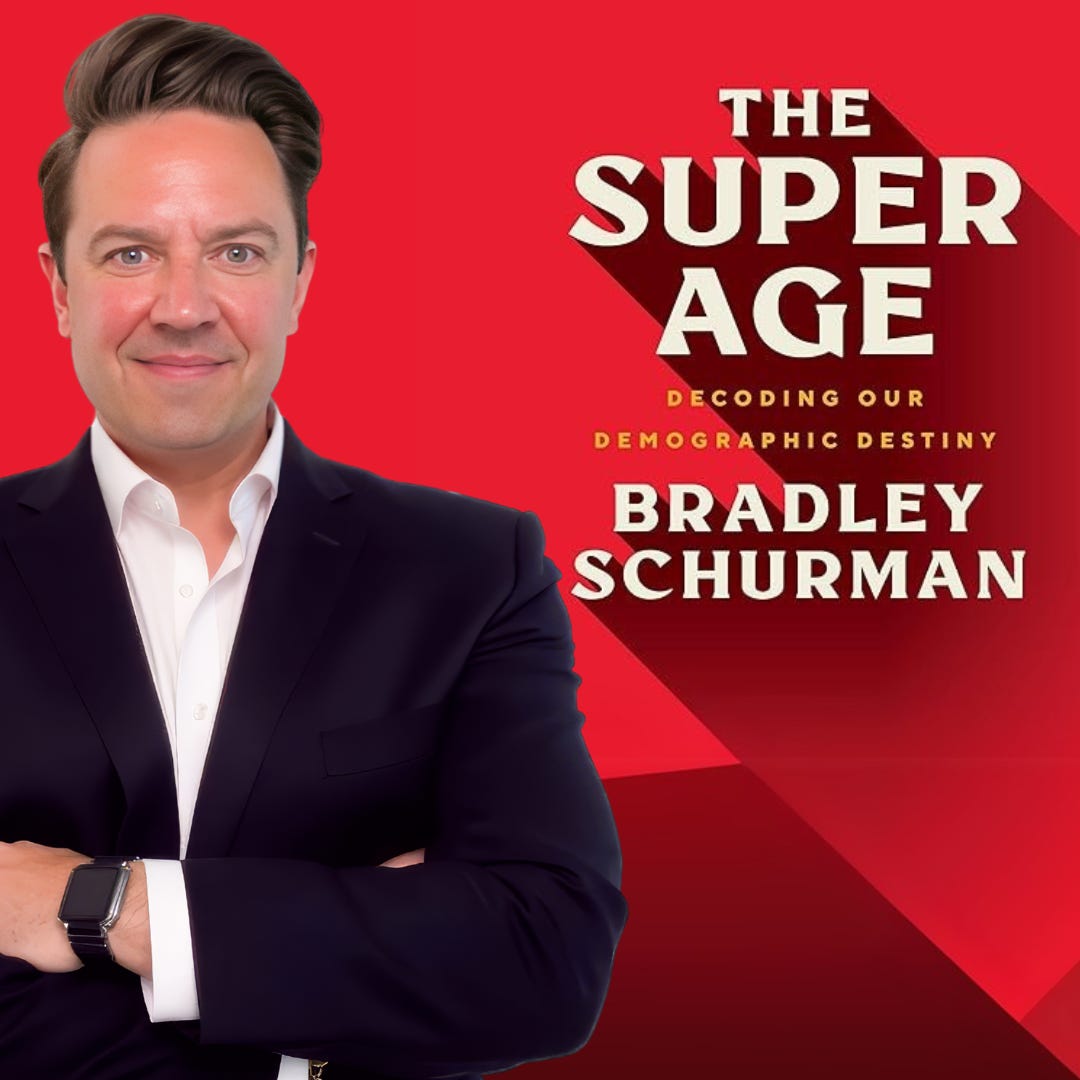
👉 Learn more about tomorrow’s demographics and our rapidly aging population by purchasing your copy of Bradley’s book, The Super Age: Decoding Our Demographic Destiny (HarperBusiness).
The best economic ideas start local and scale through proof, not press releases.
This piece cuts through hype with evidence.
The strongest signal: places aren’t just buying arrivals - they’re buying permanence. West Virginia’s 96% retention rate reframes this as a community design challenge, not a cash problem. The comparison of Tulsa’s returns to traditional incentives lands hard.
What still feels missing: a shared measurement framework across cities. Until then, every pilot risks being dismissed as anecdotal.