

Are Your Aging Parents Actually Doing OK? Holiday Visits Reveal More Than You Think
From small household clues to honest conversations, use ORCA to understand what’s really going on, and create a plan

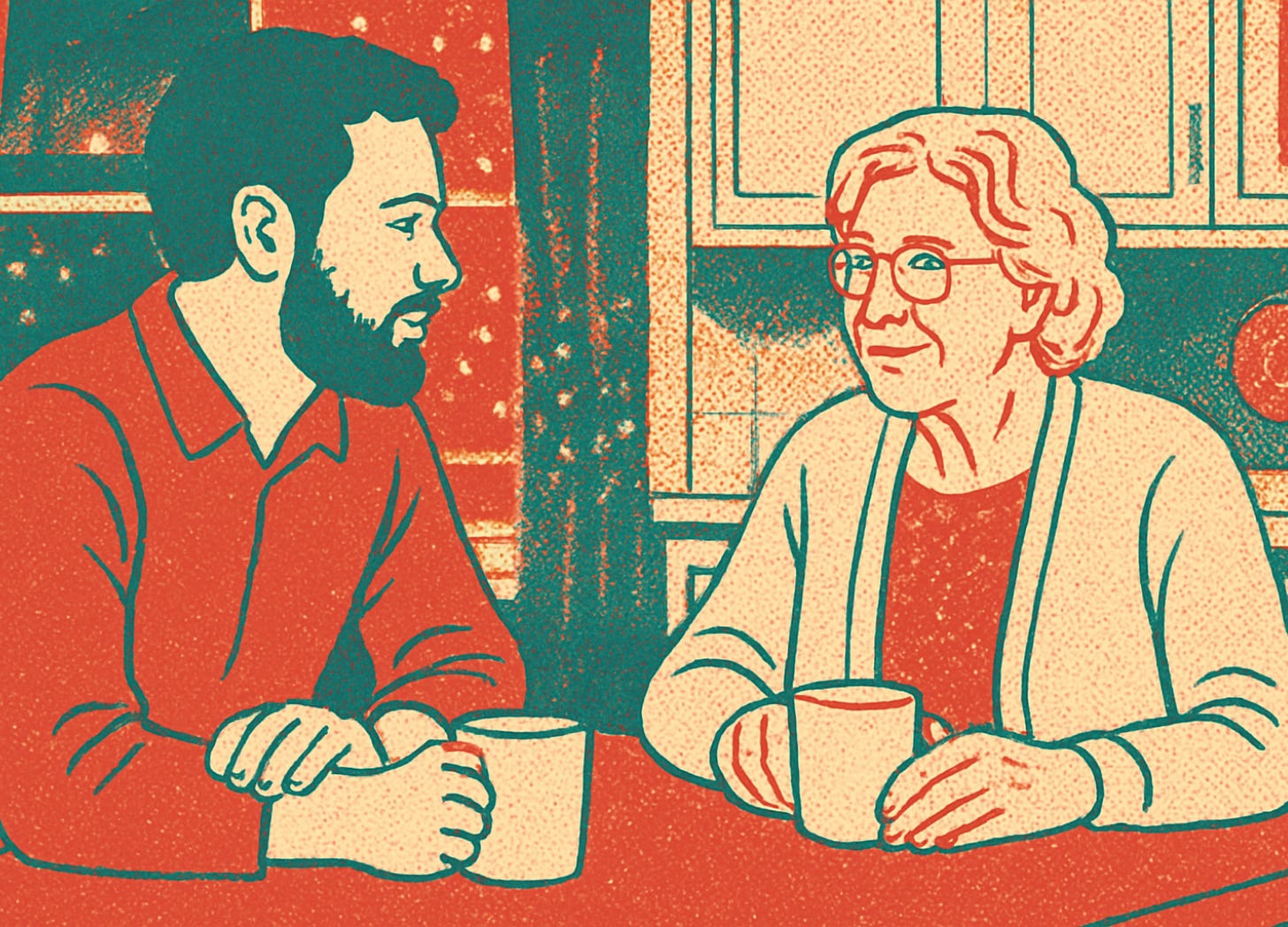
There’s always that moment when you walk back into your parents’ house for the holidays, and everything looks… mostly the same. The decorations haven’t changed much since the Bush administration, your mom’s casserole tastes exactly the way you remember it, and the regular rituals kick right in. But then something small catches your attention here and there that doesn’t seem quite right—a stack of unpaid bills, an unwatered plant, or your dad repeating himself over and over again.
And you think, Wait. Was that happening last year?
Most of us brush it off. It’s easier to slide back into the old family dynamic than to confront the fact that your parents might be shifting in ways you didn’t see coming, or weren't prepared for. But holidays are one of the only times you get a full, unfiltered read on how they’re really doing.
That’s where ORCA comes in. It’s not a clinical tool, but an acronym to help adult children make sense of what they’re noticing and turn it into something useful, rather than panic or denial.
O — Observe (without turning into the household detective)
Just pay attention. That’s it.
Researchers and clinicians talk a lot about ADLs—the basics like walking, bathing, dressing—and IADLs, which are the more complex everyday tasks (managing bills, medications, shopping, cooking, transportation). The early signs of decline often show up in those IADLs first.
Think about what you’re seeing:
Is the house messier than usual?
Are repairs being ignored?
Is the fridge full of expired food?
Does driving seem a little… tentative?
Are medications scattered or inconsistent?
And don’t forget the emotional stuff. Changes in mood, withdrawal from social life, irritability, or just feeling “flat” can be as important as any loose handrail. Loneliness and depression often show up early and can predict physical decline later.
R — Report (aka: compare notes like grown-ups)
You’re not in this alone. Check your impressions with siblings, partners, or anyone else who regularly sees your parents. The idea isn’t to build a case, but to calibrate. Sometimes someone else has noticed the same things. Sometimes you’re the only one who spotted it.
This is also where you check yourself. Age alone is a terrible predictor of decline. Some people in their 80s are thriving, while some people in their 60s are already struggling. Don’t jump to conclusions because of the number of candles on the last birthday cake. And don’t dismiss concerns because “Mom has always been sharp” or “Dad’s just a little tired.”
Bias cuts both ways.
C — Conversation (the part we dread, but doesn’t have to be painful)
Talking to parents about getting older is tough because, on some level, the roles really do flip — and it’s easy to slip into a dynamic that feels infantilizing. But the research is clear: conversations about decline that start before a crisis lead to better outcomes, more choices, and far less chaos for everyone.
And here’s the part many families get wrong: these conversations aren’t about telling your parents what to do. They’re about understanding what they want and how to best align those desires with reality.
Try questions that open doors rather than slam them shut:
How’s the house working for you these days?
Anything getting harder than it used to be?
Do you feel comfortable driving at night?
What do you want the next five or ten years to look like?
You might be surprised—many older adults have already noticed the same changes you have. They just haven’t had the space to talk about them.
A — Act (the step where all that noticing becomes something real)
Once you’ve compared notes and had a real conversation as a family, you plan together. This doesn’t mean uprooting your parents’ lives or rushing into big moves. The strongest research on aging suggests that most people can safely remain in their homes if the environment supports them.
Acting might look like:
A few home updates, like installing shower grab bars, improving lighting, removing clutter, or addressing tripping hazards.
Help with housekeeping or groceries.
Support for medications or transportation.
A home safety assessment.
Getting legal documents in order—powers of attorney, advance directives, wills, all the things that save families from future chaos.
Or simply starting to explore other housing options long before they’re needed.
The goal isn’t to fix everything. It’s to take the next right step, guided by what your parents want and what you’ve learned together.
Subscribe for more stories about how we adapt to a changing world—demographics, work, technology, and the systems that shape our lives.
👉 Bring these insights to your team by booking Bradley Schurman for a keynote presentation or consultation. Visit Human Change to learn more, schedule a conversation via Calendly, or email him directly.

👉 Learn more about tomorrow’s demographics and our rapidly aging population by purchasing your copy of Bradley’s book, The Super Age: Decoding Our Demographic Destiny (HarperBusiness).
Love how this turns a hard topic into something families can handle with care.
Really popular topic these past couple of weeks with Oprah's episode on going no contact and Mel Robbins' article on reconciling with aging parents. Thanks for putting this together.